
choosing a website or landing page for a new business is easier when each decision is tied to evidence and an owner. The objective is to launch the smallest complete digital experience that supports the current customer decision and marketing plan. This guide provides a practical sequence for a small or new business without pretending that one checklist fits every industry or jurisdiction.
Define the outcome before choosing tools
Start with the customer, the problem, and the next action. Software, branding, pages, and automation should support that journey. A clear outcome prevents the business from buying disconnected tools or creating content that looks professional but does not help a customer decide.Decisions to make first
- One offer or several services
- One audience or several buyer types
- Advertising test or long-term organic search plan
- Amount of trust and explanation required
- Available content and proof
- Need for future pages, locations, resources, or integrations
Step-by-step process
- Choose the primary customer action
- List the questions a serious buyer asks
- Map the traffic sources planned for launch
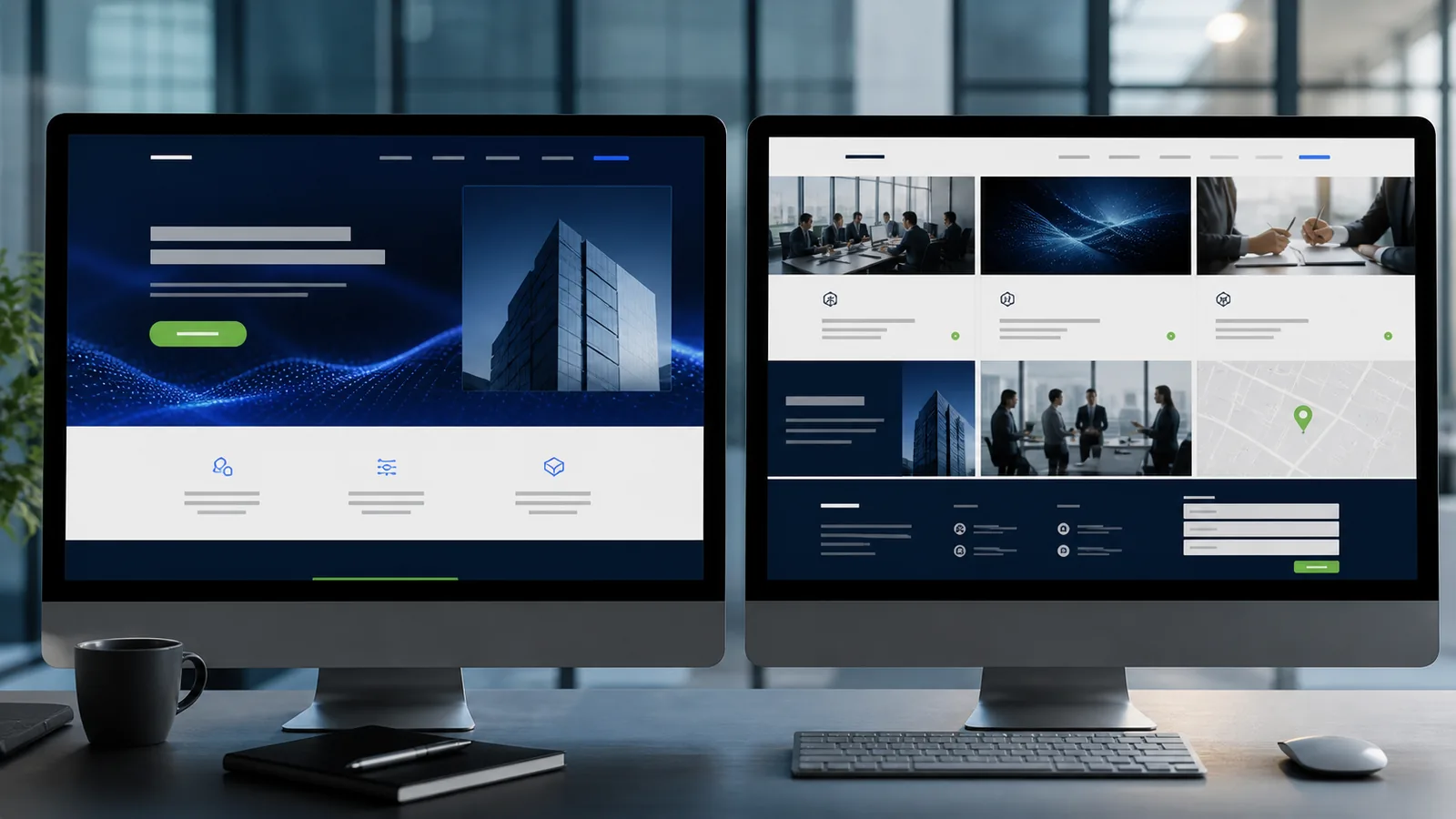
- Use a landing page for one tightly focused campaign or validation test
- Use a multi-page website when different services and trust journeys need distinct pages
- Connect analytics and conversion events before promotion
- Review lead quality and expand only where evidence supports it
What your website should explain
- Who the offer is designed for
- What problem it solves and what is included
- Where and when the business can deliver
- Why the company is credible
- What the customer should do next
- What happens after an enquiry, booking, or payment
Common mistakes to avoid
- Calling a thin homepage a complete website
- Sending every advertisement to the same generic page
- Creating many empty SEO pages
- Building a large site without enough useful content
- Ignoring account ownership and measurement
Important context
A landing page is not automatically cheap or temporary. It still requires strategy, persuasive content, design, mobile testing, performance, privacy, and measurement. A website adds structure and room for deeper proof.Measure progress with useful signals
- Qualified customer conversations
- Completed enquiries, bookings, or purchases
- Lead source and acquisition cost where available
- Response time and follow-up completion
- Reasons prospects proceed or decline
- Delivery quality, retention, and referrals
Prepare for a free website estimate
For a website related to choosing a website or landing page for a new business, prepare the primary audience, offer, customer action, page list, content, proof, integrations, ownership needs, and launch date. Gain Gati's free estimator can use those inputs to create an initial planning range.The estimate should separate launch essentials from later improvements and identify recurring costs. Final scope still depends on confirmed requirements, content responsibilities, integrations, and testing needs.