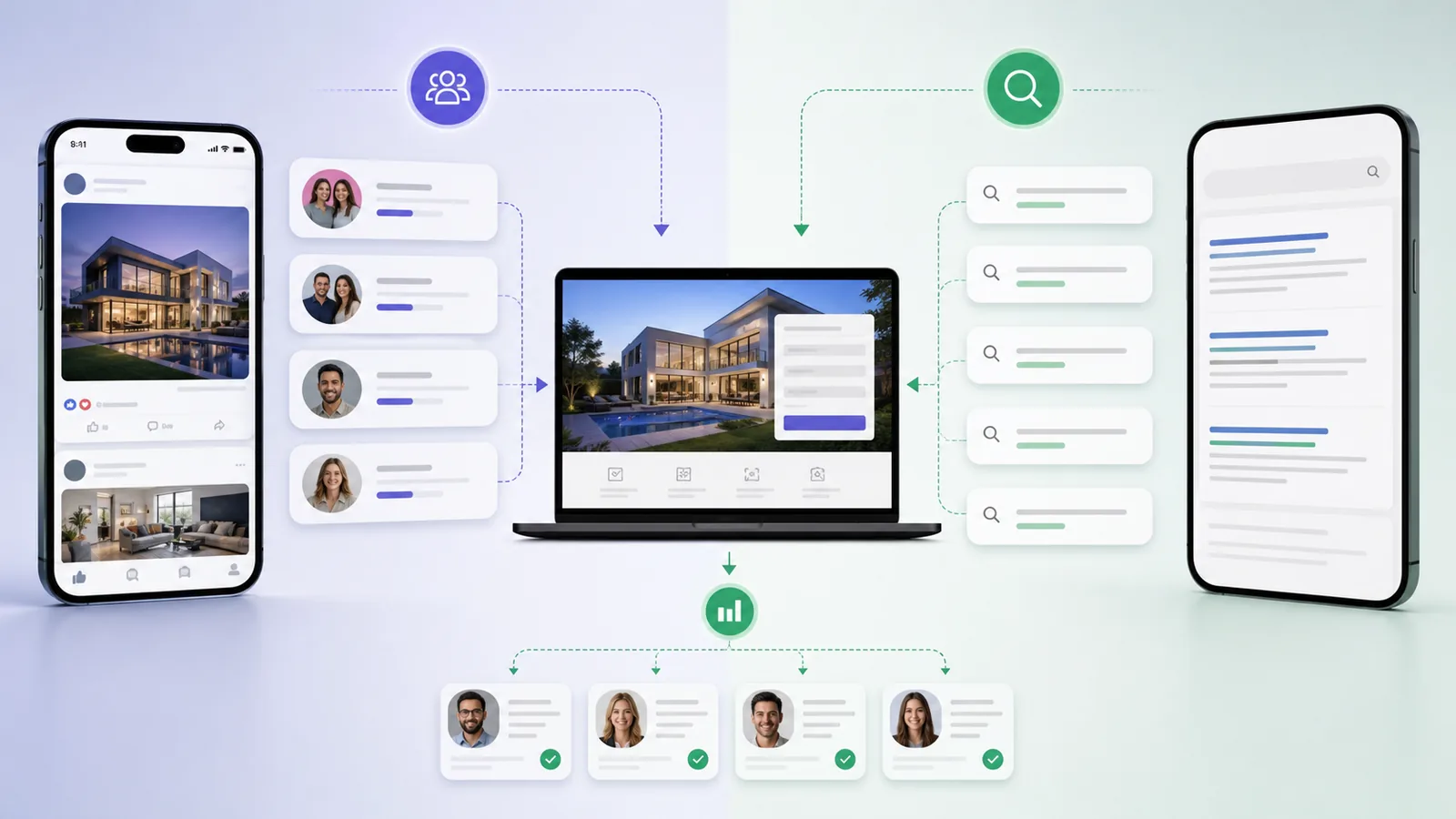
choosing between Meta Ads and Google Ads should begin with a business outcome and a data map, not with copying code into every available box. The objective is to select the channel that best matches how the target customer discovers, evaluates, and searches for the offer. Platform interfaces change, so use the current official product documentation when performing the final configuration.
Before you begin
- Use accounts owned by the business
- Give each person individual, least-privilege access
- Enable strong authentication and recovery methods
- Document existing tags, domains, integrations, and data flows
- Decide who approves changes and who monitors errors
- Review privacy, consent, and regulatory requirements for the business
Recommended setup process
- Define the customer, offer, service area, capacity, and acceptable acquisition cost
- Use search advertising when customers actively express relevant intent
- Use social advertising when discovery, education, visual proof, or audience reach matters
- Create channel-specific creative and landing pages
- Install and test meaningful conversion events
- Plan fast lead qualification and follow-up
How to verify the implementation
- Search terms or audience delivery match the intended customer
- Ads and landing pages make the same promise
- Budget is sufficient for a useful test but limited for risk control
- Lead quality is reviewed, not only platform conversions
- Qualified lead and customer outcomes return to reporting when practical
- Tests change one major variable at a time
Common errors
- Using personal accounts as the only owner
- Installing the same tag or event more than once
- Measuring button clicks as completed outcomes
- Publishing without consent and privacy review
- Forgetting test traffic, internal use, and referrals
- Trusting one platform report without operational reconciliation
Privacy and data responsibility
Collect only the data needed for a defined purpose. Restrict access, protect credentials, set retention deliberately, and explain relevant data use in clear privacy and consent language. Configuration choices should reflect the jurisdictions, customers, and technologies involved.What this setup can and cannot do
Neither Meta Ads nor Google Ads guarantees customers. Both can generate qualified opportunities when the offer, targeting, budget, creative, landing page, measurement, and sales response work together. Poor service or weak economics cannot be fixed by media buying alone.Good measurement reduces uncertainty. It cannot turn an uncompetitive offer into a strong one, make an untrained team follow up, or guarantee advertising and search results.
How the website supports marketing
- Continue the promise made in the search result or advertisement
- Show relevant proof and service details
- Load quickly and work well on mobile
- Offer a clear, low-friction next action
- Explain what happens after the enquiry
- Send reliable conversion and source signals
A practical measurement plan
- Name the primary conversion and its success condition
- Choose diagnostic events that explain the journey
- Record source and campaign details
- Connect leads to qualified, quoted, won, or lost outcomes
- Review data quality before optimizing spend
- Improve the weakest part of the journey instead of chasing one metric
Get a free website and tracking estimate
Gain Gati can prepare a free initial estimate for a website project that includes choosing between Meta Ads and Google Ads. The range depends on the existing platform, account access, consent requirements, number of conversions, connected systems, testing scope, and documentation needed.A final implementation plan should identify ownership, responsibilities, assumptions, recurring platform costs, data definitions, and acceptance tests. This creates a maintainable foundation instead of a collection of unexplained tags and accounts.