
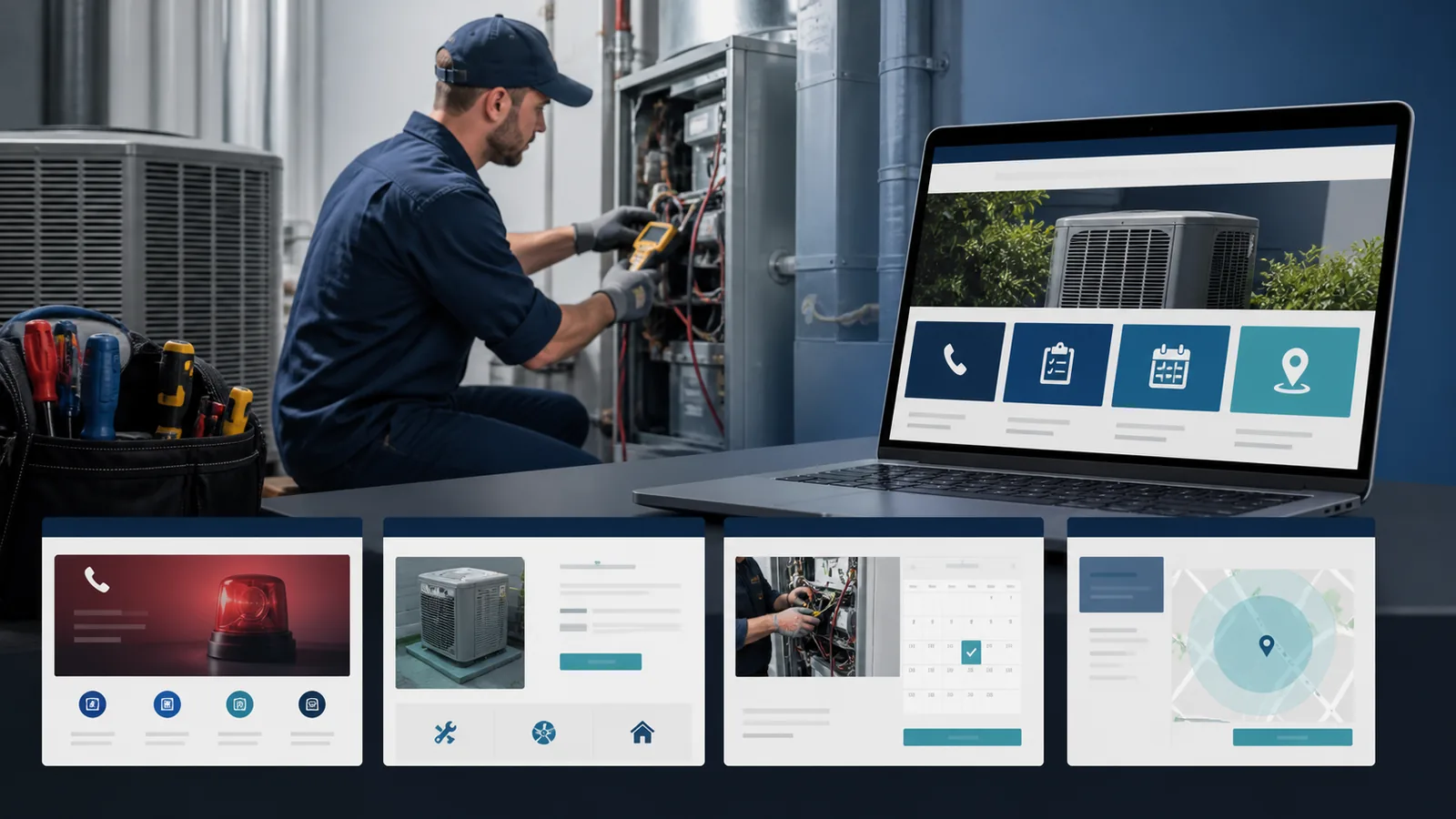
A HVAC installation and repair company website can range from a focused lead-generation site to a connected operating system. The cost depends on what homeowners, landlords, and commercial property managers must be able to learn and do, and whether the site must help them call for service, schedule maintenance, or request a replacement estimate. Page count matters, but workflow, content, data, integrations, and testing usually matter more.
This guide explains the scope behind HVAC installation and repair company website cost so different estimates can be compared fairly. It does not provide a universal price because markets, content responsibilities, platforms, integrations, and quality standards differ.
What a professional website estimate should include
- Discovery, requirements, and sitemap
- Responsive design and reusable page components
- Development and content-management setup
- Content placement and image optimization
- Forms, validation, spam protection, and notifications
- Performance, accessibility, security, and browser testing
- Analytics, search foundations, launch, and administrator handover
Essential pages for a HVAC installation and repair company
- Heating, cooling, heat-pump, and indoor-air services
- Repair, maintenance, and replacement pathways
- Emergency availability and service-area information
- Equipment, warranty, rebate, and financing context
- Reviews and installation examples
- Contact, call, booking, or estimate pages
Three practical project scopes
Focused starting website: a clear mobile-first site with priority services, proof, service areas, and reliable enquiries. It is appropriate when the offer and customer journey are straightforward.Lead-generation website: adds deeper service content, campaign landing pages, structured proof, stronger qualification, analytics, and conversion tracking. The cost grows because the full route from traffic to a useful lead must be designed and tested.
Connected website and workflow: adds booking, payments, accounts, feeds, calculators, CRM, operations software, or custom administration. This is closer to application development and needs discovery, permissions, error handling, and ongoing maintenance.
Features that change the cost
- Click-to-call and urgent-service controls
- Conditional replacement estimate form
- Maintenance-plan sign-up
- Scheduling or dispatch integration
- Financing and rebate links
- Call, form, and campaign tracking
Content and photography are part of the budget
Real service details, project examples, staff information, reviews, credentials, and original images create trust and search value. If the materials are missing, the project may need interviews, copywriting, image selection, photography, editing, permission review, or data cleanup.Generic stock images and vague claims can fill a layout, but they rarely explain why a qualified customer should choose the business. Plan content at the same time as the website structure.
Landing page or complete website?
A landing page can be effective for one campaign, service, location, or seasonal offer. A multi-page website is better when customers compare several services, need detailed proof, or search for distinct problems. Many companies use both: a durable main website and focused campaign pages.SEO, advertising, and lead tracking
- Choose one real customer intent for each important page
- Write useful, original service and location content
- Keep business details consistent
- Track successful forms, bookings, calls, or purchases
- Use campaign tags and connect leads to a CRM
- Review qualified leads and revenue, not only clicks
One-time and ongoing costs
- Domain, hosting, and business email
- Software, feed, map, booking, or payment subscriptions
- Maintenance, security updates, and backups
- Content and portfolio updates
- Search, advertising, and campaign work
- Transaction and communication fees
How to prepare for a free estimate
- Define the primary customer and website action
- List launch pages and future pages separately
- Identify forms, bookings, payments, feeds, or integrations
- Collect available content, data, images, and proof
- Name the business owner of every account
- State the launch date, review process, and ongoing support needs
Get a free website estimate
Gain Gati's free estimator can create an initial planning range for a HVAC installation and repair company website using the real page, feature, integration, content, and timeline choices. Use the range to compare scope, then confirm responsibilities, recurring charges, ownership, and acceptance tests before development.A transparent estimate should show why the project costs what it does and which choices could reduce or expand the scope. The goal is not the cheapest page package; it is a complete website the business can own, operate, measure, and improve.