
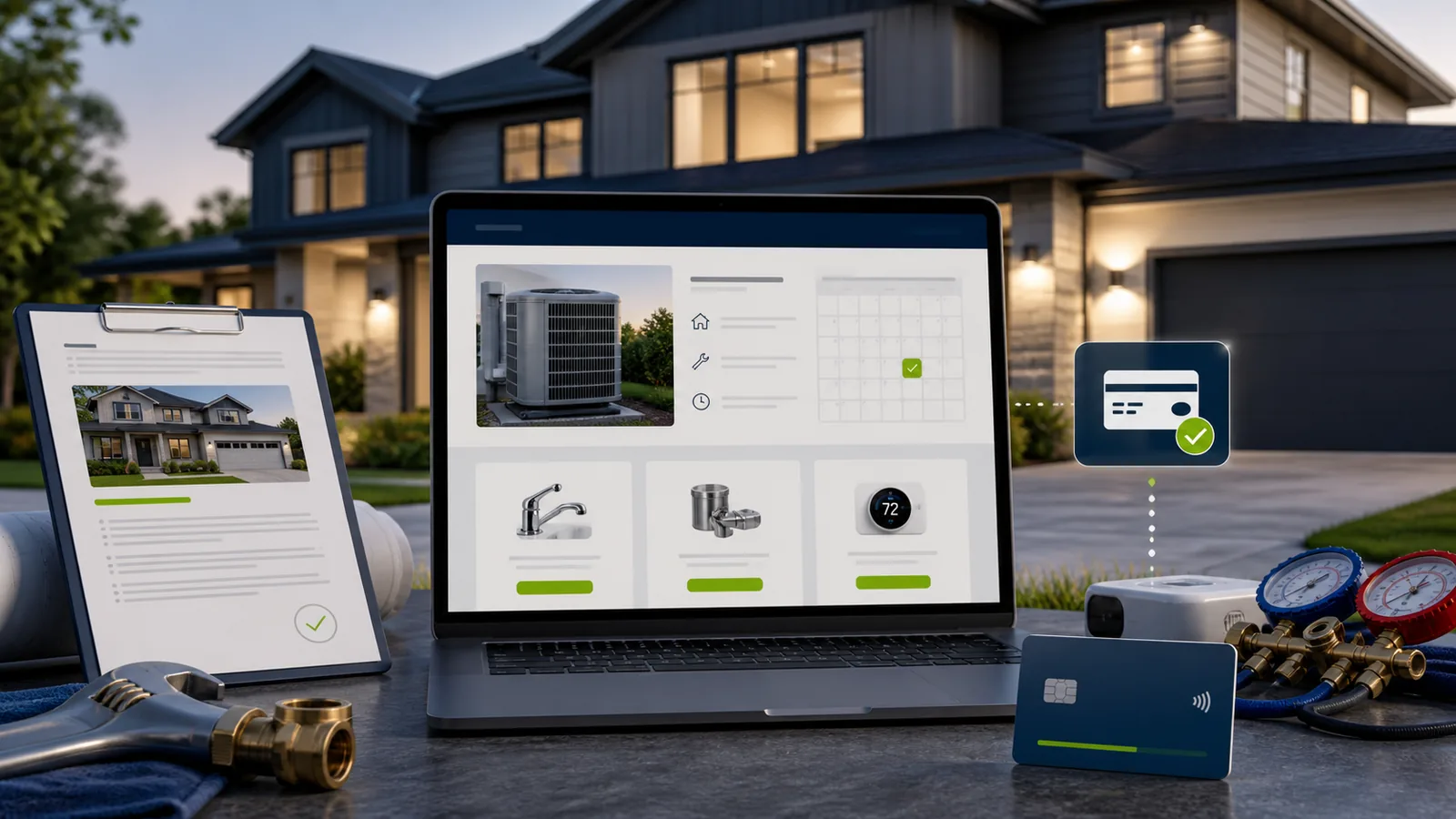
A home services website can be a simple information site or a working lead and operations tool. The final cost depends on what customers must be able to do, how the business handles each request, and which systems need to connect behind the scenes.
For HVAC, plumbing, electrical, cleaning, landscaping, roofing, painting, inspection, and repair companies, the website should help a visitor request a quote, schedule a visit, call for urgent help, or pay securely online. This guide explains the scope decisions that affect cost and shows how to prepare for a useful free estimate instead of comparing vague package prices.
What is included in home services website cost?
A professional estimate normally covers discovery, structure, design, mobile layouts, development, content placement, forms, testing, launch, and administrator handover. It may also include analytics, search setup, integrations, and training. Always ask which items are included, which are optional, and which create recurring fees.- Planning the page structure and customer journey
- Design for desktop, tablet, and mobile screens
- Development and content-management setup
- Lead forms, validation, spam protection, and notifications
- Basic technical and on-page search setup
- Analytics, testing, launch, and administrator access
Three practical project scopes
Focused starting version
The smallest practical scope is a focused website with service pages, service areas, reviews, project photos, and dependable enquiry forms. It should still be fast, mobile-friendly, secure, and easy for customers to act on. A low page count does not remove the need for clear content and dependable lead delivery.Lead-generation website
A lead-generation build adds more detailed service content, campaign landing pages, stronger proof, conditional forms, analytics, and conversion tracking. The cost increases because the team must design and test the complete path from first visit to a qualified enquiry.Connected website and business system
The larger scope is online booking, detailed quotation requests, payment collection, automated confirmations, and customer updates. These functions require workflow decisions, account permissions, data handling, integration testing, and administrative tools. They are closer to custom software than to ordinary website pages.Features that can change the estimate
These features are common cost drivers. Not every company needs all of them at launch, so prioritize what supports the most important customer journey.- Mobile-first service pages
- Click-to-call and urgent-service actions
- Quote and appointment request forms
- Service-area information
- Reviews and before-and-after galleries
- Booking availability and confirmations
- Online deposits or payments
- Analytics and advertising conversion tracking
Website or landing page: which should you choose?
A landing page can be effective for one service, one location, or one advertising campaign. It gives visitors a focused message and a single action. A multi-page website is more appropriate when customers compare several services, need detailed proof, or search for different problems and locations.Many businesses benefit from both: a strong main website as the long-term foundation and focused landing pages for specific campaigns. The estimate should clearly separate reusable website components from campaign-specific work.
Content and photography affect cost too
Real service descriptions, project photographs, customer reviews, credentials, and frequently asked questions make the website more trustworthy. If these materials are disorganized or missing, the project may require interviews, copy preparation, image selection, editing, or new photography.Provide original business information wherever possible. Generic claims and stock images may fill space, but they rarely explain why a customer should trust one provider over another.
Do not forget ongoing website costs
A complete budget may include domain renewal, hosting, email, maintenance, backups, security, software subscriptions, payment-processing charges, and advertising. Separate these recurring expenses from the one-time design and development investment.The business should control its domain, website administrator account, analytics, advertising properties, and important third-party accounts. Clear ownership prevents expensive migrations later.
How to prepare for an accurate free estimate
- List every service and the locations actually covered
- Choose the main action for urgent and non-urgent customers
- Collect real project photographs and customer reviews
- Define booking rules, working hours, and travel limits
- Identify any calendar, CRM, payment, or job-management tools that must connect
Questions to ask before choosing a website provider
- Who owns the domain, hosting, website files, and administrator accounts?
- Are mobile design, accessibility, security, and testing included?
- How are leads delivered, tracked, and protected from spam?
- What happens to existing URLs and search traffic?
- Which fees continue after launch?
- How will future services, locations, staff, or integrations be added?
Get a free home services website estimate
A useful estimate should reflect the services, customer actions, content, integrations, and operating workflow of the business. Gain Gati's project estimator asks practical questions and provides an initial investment range and delivery estimate without committing you to a project.Start with the free project estimator, then confirm exact requirements and responsibilities before development begins. Clear scope creates a more dependable budget and a website that can support real business growth.