
building a website for a new company is easier to plan when the business starts with outcomes instead of a page package. For founders who need a clear sequence instead of starting with colors or software, the goal is to move from a validated offer to a measurable, business-owned website with fewer launch surprises.
This guide separates the decisions that materially change scope from the details that can be refined later. It also gives you a practical preparation list for Gain Gati's free project estimator.
Start with the business outcome
The website should support a specific customer decision and a specific business process. Write that outcome in one sentence before choosing a platform, theme, page count, or feature list. A clear outcome makes building a website for a new company easier to compare and approve.What changes the scope?
- Customer and business goal
- Domain and account ownership
- Page structure
- Content and proof
- Design and development
- Testing, analytics, and promotion
What a practical project should include
- Strategy brief
- Sitemap
- Content checklist
- Responsive design
- Forms and tracking
- Launch and handover
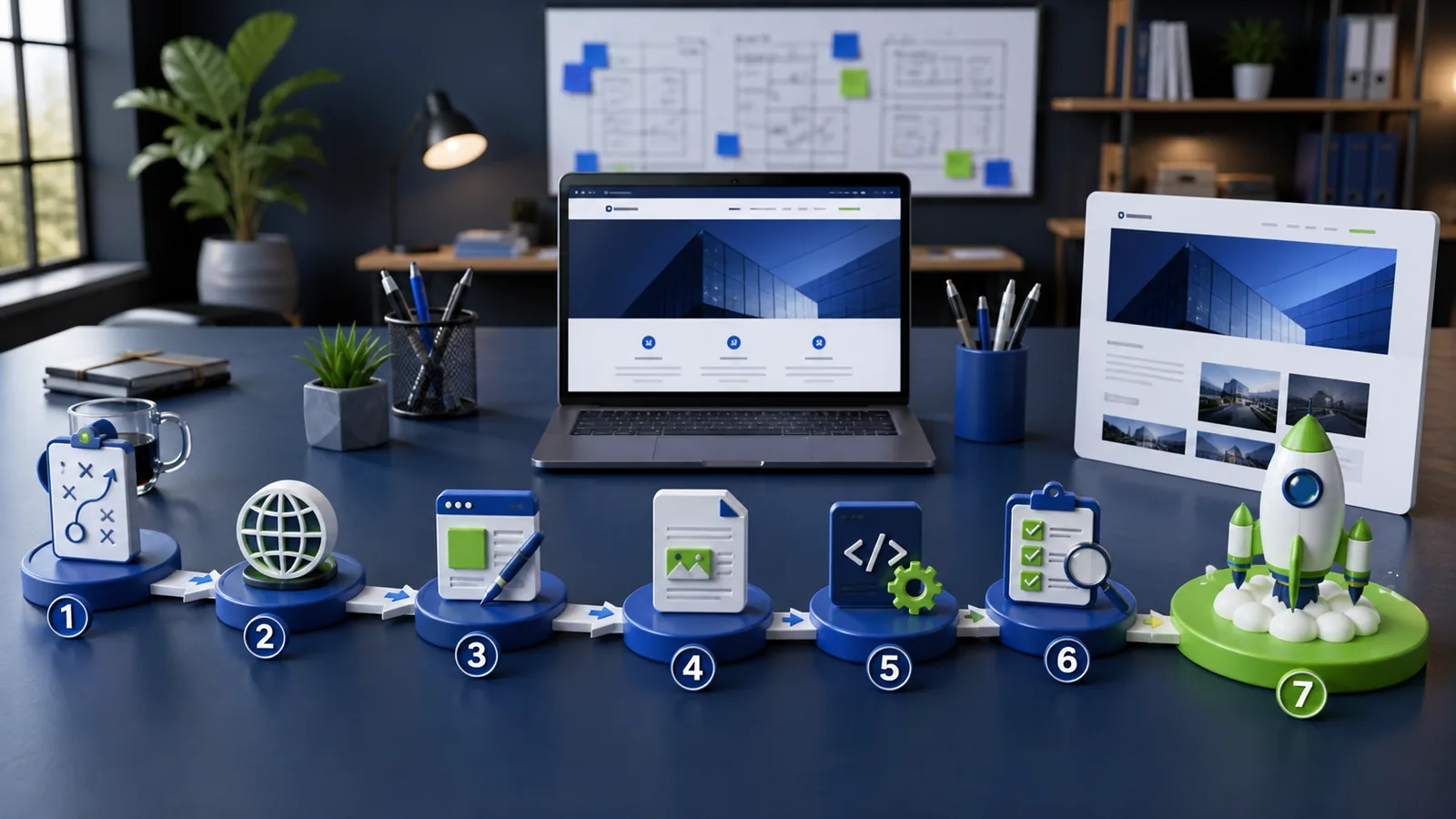
A step-by-step approach
- Define the customer and action
- Choose and register the domain
- Plan pages and content
- Design around the customer journey
- Build and connect required tools
- Test on real devices
- Launch, measure, and improve
Common mistakes to avoid
- Starting with a theme instead of a goal
- Writing content after design is finished
- Skipping mobile testing
- Launching forms without testing delivery
- Failing to install measurement
Cost and timeline considerations
Planning and content readiness have a major effect on schedule and cost. Clear decisions reduce revisions, while integrations and custom workflows require additional discovery and testing.Separate essential launch requirements from a future roadmap. A smaller complete first version is usually more valuable than a large unfinished build.
What to prepare before requesting an estimate
- Offer and audience
- Business details
- Page list
- Images and proof
- Required accounts and integrations
Questions to ask a website provider
- Who owns the domain, hosting, files, and administrator accounts?
- What content and images are included?
- How are mobile layouts, accessibility, security, and forms tested?
- Which recurring charges continue after launch?
- How will analytics and lead conversions be measured?
- How can the website expand later?
Get a free project estimate
Gain Gati's estimator asks practical questions related to building a website for a new company, customer actions, integrations, payments, and timeline. It provides an initial range for planning without requiring a project commitment.Use the result as a starting point, then confirm the detailed scope and responsibilities before development. A transparent estimate should help you make a decision, not hide important assumptions.